
Thursday, 27 October 2011


Beatles

Following the White Album(and
the magnificent Hey Jude) they made Let It Be and with the final regal
glory of Abbey Road they left their grieving fans a legacy that will
never be matched.
In the inevitable breaking down of old liaisons,
there was room for growth. John met and married Yoko; Paul met and
married Linda. George matured far beyond his years, settled into his
spiritual space and expressed himself writing classic songs; Ringo was
now writing his own numbers and was widely acknowledged as a supreme
drummer and a very good actor. To everything there is a season.That the rift between The Beatles, evolved with much public angst was a pity but this is not a perfect world is it?
Relationships anyway, were repaired long ago.
And in the end, the equation between the love they took and the love they made was intact into infinity. They still represent the twentieth century’s greatest romance.

Beatles

It was the great glory of The
Beatles that they could absorb and transmute so much, first in those
tiny houses in Liverpool, listening to eclectic 1940s wireless, then to
r’n’r and r&b and to Dylan and the poets and soon to music and
messages from India.
Unafraid of growth, dogged individuals with a
powerful devotion to the group ethic, the Beatles accepted each other’s
offerings and really “cooked” to make each record a feast that left us
breathless with admiration. They never stood still.The Beatles started their own company, Apple Corps with five creative divisions – records, films etc – and then went public with an offer that anyone with an artistic need could come to them and get help. Is there, even now, a machine to count such numbers?
The promise was that all sincere supplicants would be given encouragement, succour, a contract and maybe an envelope full of money. At the same time, the Beatles flew to foothills of the Himalayas to learn meditation. There, between sessions with the Maharishi, they wrote songs for what would become The ‘White’ Album.
When recording started, the songs had come in such profusion that, famously, The White Album had thirty of them – enough for two high-class musicals. They sped from one track to another, content that the unity of the album would transcend the disparity in the style and content of the tracks. It was always their strength that they wrote bewitching singles.
New songs were written to suit themselves; sometimes written alone. This new work could virtually be recorded solo, spontaneously, simply.
Beatles

Greatly turned on by the Spirit
of the Age and by the “tea-parties” of those times, the Beatles
provided a sound-track for the plottings of the baby boomers – millions
of them – whose enlightenment (however compromised it may have been by
the material world in the harsh times since) still provides a hedge
against humankind’s grosser instincts.
The Beatles
They... go
into the studio which brings an amazed world the mighty whirligig of Sgt
Pepper, Penny Lane and Strawberry Fields here on the screen in surreal
and glorious colour. They sing Baby You’re A Rich Man and they all are,
but they don’t buy an island in Greece.The Beatles
Beatles

In the studio years (1966 onwards), supported by the steady hand of the great George Martin, they would produce songs which would be forever fresh and which still set the standards against the newcomers have to test themselves.
Beatles

1965
These were the years of dash
and daring. Sweeping out of the final (and wonderfully old-fashioned)
1964 family Christmas Shows into the wider world of 1965, The Beatles
would soon find themselves figureheads of a movement far beyond “pop”
where a counter-culture / alternative society was made flesh. National
boundaries were presumed to be doomed. Millions of minds were to become
expanded and many trousers would soon be spandex.
...though the
music would continue to pour out of them breaking in great waves over
uncharted, challenging Reason and warming the heart, the Beatles would
tire of those great sweating stadiums where they now played to screaming
crowds who could no longer hear them.

Beatles

1963
“They’ve got something! From Liverpool, I hear, of all places.” “From Liverpool uber alles!”
They
leave their Cavern Club and within months they take the ascendancy in
the British pop world, and start to live the life of Riley in London.
They play the Palladium, the Royal Albert Hall, The Royal Variety Show,
sing Moonlight Bay with Morecombe and Wise, give a spare hit to the
Rolling Stones, play hundreds of concerts in Britain, nip over to
Sweden, invent Beatlemania, record I Want to Hold Your Hand (their 4th
British number one in a year) and, as if in a dream – while their
conquering Paris – the record goes to Number One in America three weeks
before the Ed Sullivan Show in New York.If there had been no Beatles, no one would have had the imagination to invent such a story.
Beatles

1957-62
“The story began in Harold
Macmillan’s “never had it so good” ’50s Britain. It should be fiction:
four teenagers with no more than eight O’Levels between them, running
and biking and busing and busking all over Liverpool in search of new
chords and old guitars and half-decent drum kit and any gig at all.
They
were determined to amount to something – in George’s words “we just had
this amazing inner feeling of: ‘We’re going to do it’. I don’t know
why... we were just cocky” – and make a record (in Ringo’s words you’d
kill for that bit of plastic and make some money and have a laugh and
shout. That would do to be going on with.Six years later, they were the four most famous and musical men on earth, the best dressed and on a good day the most captivating people anyone can remember. The narrative that began where Paul met John and clicked at a garden fete in leafy Liverpool, and ended in high dudgeon in high-end London, is so far fetched that it needs the power of a song punctuating every page to remind you with a joyous jolt that it was all true.
We didn’t dream it... though it came out of John’s dream of the “man on a flaming pie” who said “You are Beatles with an ‘A’”. It did all happen. The whole wonderful thing did happen, a long time ago, on the Mersey, on the Elbe, by the Thames and the Hudson River.
Amazing and marvellous and, nearly forty years on, forever young.


Beatles

INTRODUCTION
I have never seen
anything like it. Nor heard any noise to approximate the ceaseless,
frantic, hysterical scream which met the Beatles when they took the
stage after what seemed a hundred years of earlier acts. All very good,
all marking time, because no one had come for anything other than the
Beatles...
Then the theatre went wild. First aid men and police –
men in the stalls, women mainly in the balcony – taut and anxious,
patrolled the aisles, one to every three rows.Many girls fainted. Thirty were gently carried out, protesting in their hysteria, forlorn and wretched in an unrequited love for four lads who might have lived next door.
The stalls were like a nightmare March Fair. No one could remain seated. Clutching each other, hurling jelly babies at the stage, beating their brows, the youth of Britain’s second city surrendered themselves totally.”
Derek Taylor (From his book “Fifty Years Adrift”
B. B. King, Freddie King, Albert King & Earl King "The four kings of blues guitar" (2009)


B. B. King

Freddie King

Albert King

Earl King

Wednesday, 26 October 2011

Tuesday, 25 October 2011

Monday, 24 October 2011

Friday, 21 October 2011


Thursday, 20 October 2011

Wednesday, 19 October 2011


Tuesday, 18 October 2011


Monday, 17 October 2011


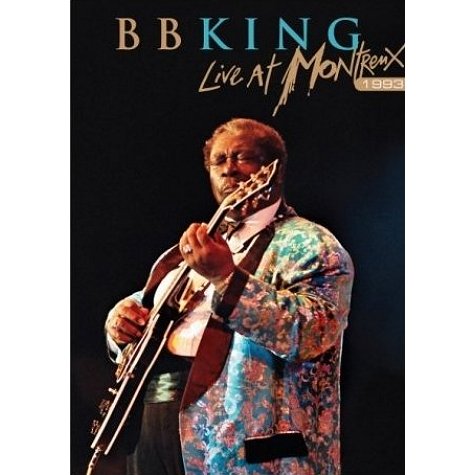
B. B. King

His reign as King of the Blues has been as long as that of any monarch on earth. Yet B.B. King continues to wear his crown well. At age 76, he is still light on his feet, singing and playing the blues with relentless passion. Time has no apparent effect on B.B., other than to make him more popular, more cherished, more relevant than ever. Don't look for him in some kind of semi-retirement; look for him out on the road, playing for people, popping up in a myriad of TV commercials, or laying down tracks for his next album. B.B. King is as alive as the music he plays, and a grateful world can't get enough of him.
For more than half a century, Riley B. King - better known as B.B. King - has defined the blues for a worldwide audience. Since he started recording in the 1940s, he has released over fifty albums, many of them classics. He was born September 16, 1925, on a plantation in Itta Bena, Mississippi, near Indianola. In his youth, he played on street corners for dimes, and would sometimes play in as many as four towns a night. In 1947, he hitchhiked to Memphis, TN, to pursue his music career. Memphis was where every important musician of the South gravitated, and which supported a large musical community where every style of African American music could be found. B.B. stayed with his cousin Bukka White, one of the most celebrated blues performers of his time, who schooled B.B. further in the art of the blues.
B.B.'s first big break came in 1948 when he performed on Sonny Boy Williamson's radio program on KWEM out of West Memphis. This led to steady engagements at the Sixteenth Avenue Grill in West Memphis, and later to a ten-minute spot on black-staffed and managed Memphis radio station WDIA. "King's Spot," became so popular, it was expanded and became the "Sepia Swing Club." Soon B.B. needed a catchy radio name. What started out as Beale Street Blues Boy was shortened to Blues Boy King, and eventually B.B. King.
In the mid-1950s, while B.B. was performing at a dance in Twist, Arkansas, a few fans became unruly. Two men got into a fight and knocked over a kerosene stove, setting fire to the hall. B.B. raced outdoors to safety with everyone else, then realized that he left his beloved $30 acoustic guitar inside, so he rushed back inside the burning building to retrieve it, narrowly escaping death. When he later found out that the fight had been over a woman named Lucille, he decided to give the name to his guitar to remind him never to do a crazy thing like fight over a woman. Ever since, each one of B.B.'s trademark Gibson guitars has been called Lucille.
Soon after his number one hit, "Three O'Clock Blues," B.B. began touring nationally. In 1956, B.B. and his band played an astonishing 342 one-night stands. From the chitlin circuit with its small-town cafes, juke joints, and country dance halls to rock palaces, symphony concert halls, universities, resort hotels and amphitheaters, nationally and internationally, B.B. has become the most renowned blues musician of the past 40 years.
Over the years, B.B. has developed one of the world's most identifiable guitar styles. He borrowed from Blind Lemon Jefferson, T-Bone Walker and others, integrating his precise and complex vocal-like string bends and his left hand vibrato, both of which have become indispensable components of rock guitarist's vocabulary. His economy, his every-note-counts phrasing, has been a model for thousands of players, from Eric Clapton and George Harrison to Jeff Beck. B.B. has mixed traditional blues, jazz, swing, mainstream pop and jump into a unique sound. In B.B.'s words, "When I sing, I play in my mind; the minute I stop singing orally, I start to sing by playing Lucille."
In 1968, B.B. played at the Newport Folk Festival and at Bill Graham's Fillmore West on bills with the hottest contemporary rock artists of the day who idolized B.B. and helped to introduce him to a young white audience. In ``69, B.B. was chosen by the Rolling Stones to open 18 American concerts for them; Ike and Tina Turner also played on 18 shows.
B.B. was inducted into the Blues Foundation Hall of Fame in 1984 and into the Rock and Roll Hall of Fame in 1987. He received NARAS' Lifetime Achievement Grammy Award in 1987, and has received honorary doctorates from Tougaloo(MS) College in 1973; Yale University in 1977; Berklee College of Music in 1982; Rhodes College of Memphis in 1990; Mississippi Valley State University in 2002 and Brown University in 2007. In 1992, he received the National Award of Distinction from the University of Mississippi.
In 1991, B.B. King's Blues Club opened on Beale Street in Memphis, and in 1994, a second club was launched at Universal CityWalk in Los Angeles. A third club in New York City's Times Square opened in June 2000 and most recently two clubs opened at Foxwoods Casino in Connecticut in January 2002. In 1996, the CD-Rom On The Road With B.B. King: An Interactive Autobiography was released to rave reviews. Also in 1996, B.B.'s autobiography, "Blues All Around Me" (written with David Ritz for Avon Books) was published. In a similar vein, Doubleday published "The Arrival of B.B. King" by Charles Sawyer, in 1980.
B.B. continues to tour extensively, averaging over 250 concerts per year around the world. Classics such as "Payin' The Cost To Be The Boss," "The Thrill Is Gone," How Blue Can You Get," "Everyday I Have The Blues," and "Why I Sing The Blues" are concert (and fan) staples. Over the years, the Grammy Award-winner has had two #1 R&B hits, 1951's "Three O'Clock Blues," and 1952's "You Don't Know Me," and four #2 R&B hits, 1953's "Please Love Me," 1954's "You Upset Me Baby," 1960's "Sweet Sixteen, Part I," and 1966's "Don't Answer The Door, Part I." B.B.'s most popular crossover hit, 1970's "The Thrill Is Gone," went to #15 pop.
Source: www.bbking.com
Arthur "Big Boy" Crudup

Arthur "Big Boy" Crudup (August 24, 1905 – March 28, 1974) was a Delta blues singer, songwriter and guitarist. He is best known outside blues circles for writing songs such as "That's all right" (1946), "My baby left me" and "So glad you're mine", later covered by Elvis Presley and dozens of other artists.
CAREER
Arthur Crudup was born in Forest, Mississipi in 1905. For a time he lived and worked throughout the South and Midwest as a migrant worker. He and his family returned to Mississippi in 1926. He sang gospel, then began his career as a blues singer around Clarksdale, Mississipi. As a member of the Harmonizing Four he visited Chicago in 1939. Crudup stayed in Chicago to work as a solo musician, but barely made a living as a street singer. Record producer Lester Melrose allegedly found him while he was living in a packing crate, introduced him to Tampa Red and signed him to a recording contract with RCA Victor's Bluebird label.
He recorded with RCA in the late 1940s and with Ace Records, Checker Records and Trumpet Records in the early 1950s and toured throughout the country, specifically black establishments in the South, with Sonny Boy Williamson II and Elmore James (around 1948). He also recorded under the names Elmer James and Percy Lee Crudup. He was popular in the South with records such as "Mean Old 'Frisco Blues", "Who's Been Foolin' You" and "That's All Right".
Crudup stopped recording in the 1950s, however, after further battles over royalties. His last Chicago session was in 1951. His 1952-54 recording sessions for Victor were held at radio station WGST in Atlanta, Georgia. He returned to recording with Fire Records and Delmark Records and touring in 1965. Sometimes labeled as "The Father of Rock and Roll", he accepted this title with some bemusement. Ungratified due to the loss of royalties, he would refer to his admirer Presley as 'Elvin Preston'. Throughout this time Crudup worked as a laborer to augment the non-existent royalties and the small wages he received as a singer. Crudup returned to Mississippi after a dispute with Melrose over royalties, then went into bootlegging, and later moved to Virginia where he had lived and worked as a musician and laborer. In the early 1970s, two local Virginia activists, Celia Santiago and Margaret Carter, assisted him in an attempt to gain royalties he felt he was due, with little success.
From the mid 1960s, Crudup returned to bootlegging and working as an agricultural laborer, chiefly in Virginia, where he lived with his family including three sons and several of his own siblings. On the Eastern Shore of Virginia, while he lived in relative poverty as a field laborer, he occasionally sang and supplied moonshine to a number of drinking establishments, including one called the Dew Drop Inn, in Northampton County for some time prior to his death from complications of heart disease and diabetes. On a 1970 trip to the UK he recorded Roebuck Man with local musicians. His last professional engagements were with Bonnie Raitt.
There was some confusion as to his actual date of death because of his use of several names, including those of his siblings. He died of a heart attack in the Nassawadox hospital in Northampton County, Virginia in 1974.
Crudup was honored with a marker on the Mississippi Blues Trail placed at Forest.
Source: Wikipedia
Subscribe to:
Posts (Atom)